
Do Ballet’s Emperors Have No Clothes?
While the dance world recycles the same choreographers, American Ballet Theatre’s incubator reveals what ballet has been missing: a system for developing its own creators.

Choreographers are often treated as messiahs, prophets appearing seemingly from nowhere, mirages in a desert—in possession of a rare gift. While the gift may be somewhat rare, it, like any other talent, must be mined and developed. The ballet world in particular has no systemic practice for discovering and nurturing new dancemakers; thus, it is up to the individual dancer to experiment with choreographic creation, often without oversight, performance outlet or resources. This is true even in ballet schools, where, bafflingly, there is no element of dance-creation built into the training. Instead, compliance is king, and young dancers (especially the girls) are conditioned to absorb only the vision of another—a systemic void that leaves us with a general dearth of new works and new dancemakers.
GIFT IDEA FOR A DANCE LOVER: Marquee TV Subscription (50% off for students and educators). Like Netflix for the arts.
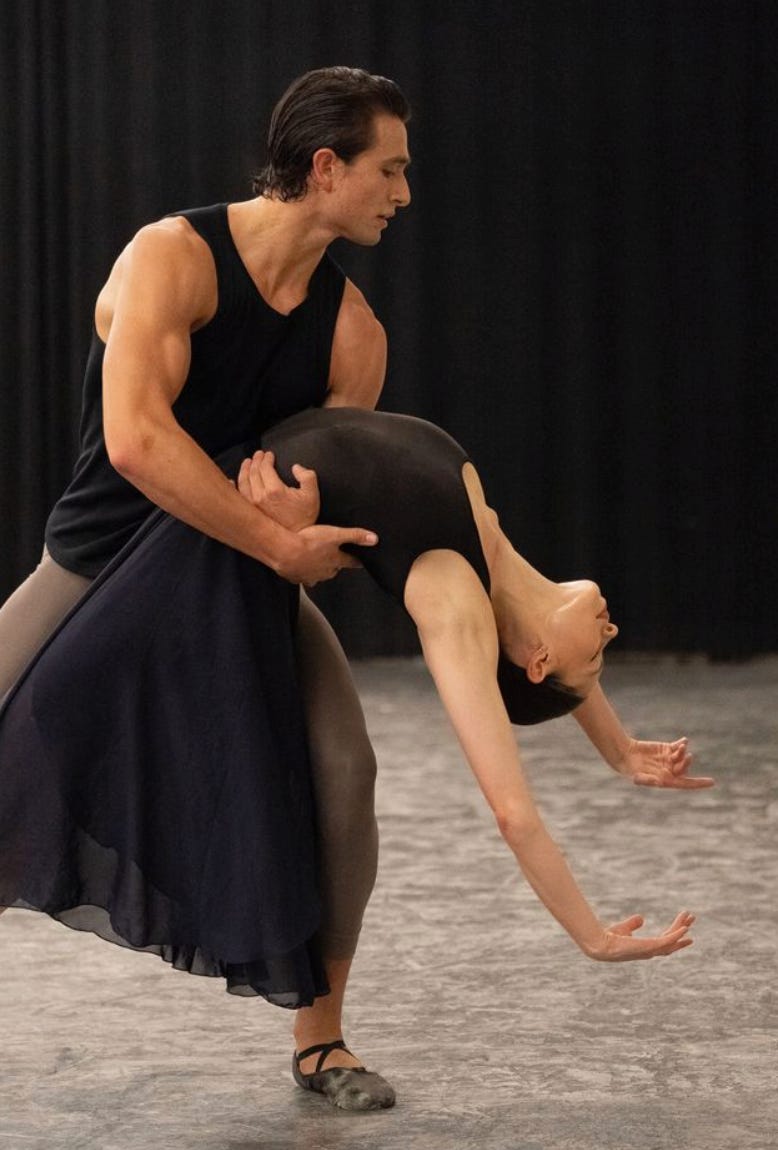
Finnian Carmeci, Sierra Armstrong in ‘Mantle’. Photo: Natalia Sanchez.
Dance creation is difficult in that it requires so many materials just to begin: skilled bodies, time, space, and, eventually, a performance venue—all resources that don’t come cheap. Few dancers have the bandwidth or interest in fundraising. And those who do have the wherewithal to create opportunities for themselves may or may not be the talents with the most to contribute. Imagine if all writers or painters had to raise thousands of dollars simply to make a few sketches or practice their craft; our walls and bookshelves would be some version of barren.
Although once a choreographer achieves some success and is publicly anointed, it becomes a kind of blasphemy not to like their work. This hive mind, which exists both inside and outside the theater, often leaves us with “Emperor’s New Clothes” syndrome. If you remember the fairytale, the Emperor walks naked, believing he is adorned in magical fabric, and the crowds outwardly praise his “finery.” Only the innocent child dares to say, “He isn’t wearing any clothes.” In the dance world today, there are many versions of the naked emperor, moving incestuously from one production to another, while other talents may be languishing unheard simply because it doesn’t occur to us that we should be proactively supporting new artists—creating spaces where the next “rare” talent may emerge. While this is not to say that current successful choreographers aren’t of merit, it is to ask: why are there so few? Because rather than systematically supporting potential artists in furthering the form, we look around for assurance as to who has already been chosen.
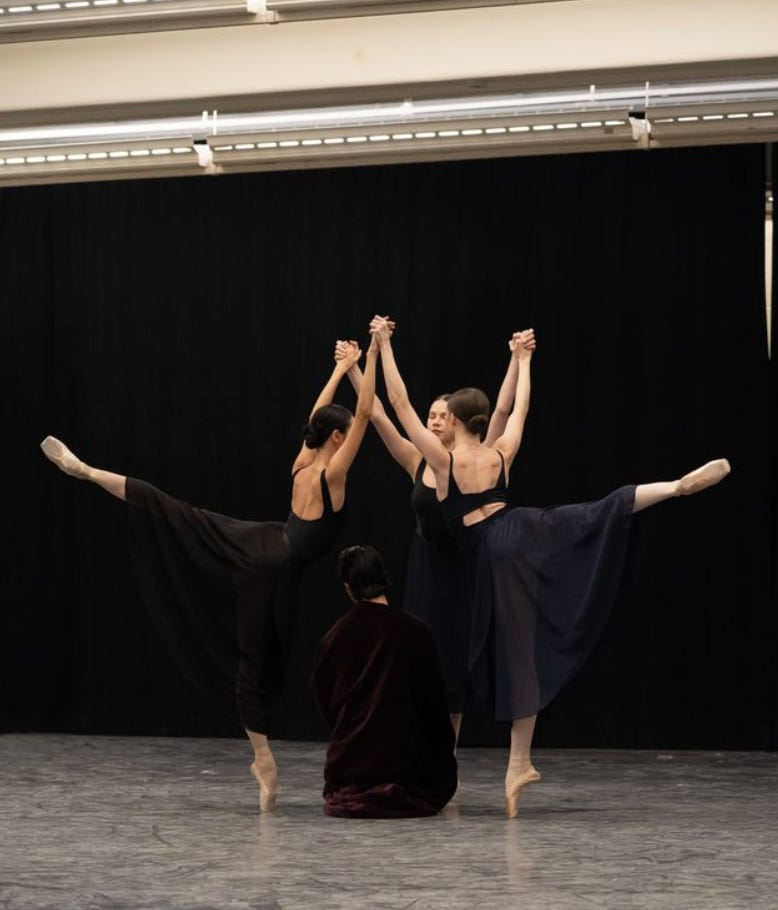
Sunmi Park, Sierra Armstrong, Ingrid Thoms, Finnian Carmeci (center) in James Whiteside’s ‘Mantle’. Photo: Natalia Sanchez.
American Ballet Theatre (ABT) is one of the few companies with an in-house choreography incubator—an opportunity more major companies should be offering to develop the voices of their own artists (and to guarantee the evolution and survival of their own artistic legacies). In ABT’s incubator program, directed by Soloist José Sebastian, dancers apply to choreograph a piece and, if selected, are given precious resources: dancers (their ABT colleagues), studio space, and mentorship. The program culminates in an in-studio performance. In this year’s presentation, there was one choreographer in particular who demonstrated—without question—that the company has a significant choreographic voice simmering within its ranks.
The first piece: Piano Pieces by Melvin Lawovi, set to Brahms was an elegant work for six dancers, three couples with the men in black and the women in white long sleeve leotards and skirts. Lawovi’s point of view is musical and easy to enter, like looking at Greek ruins, one immediately notices the bones of classical architecture and sees the potential were it to be fully constructed.
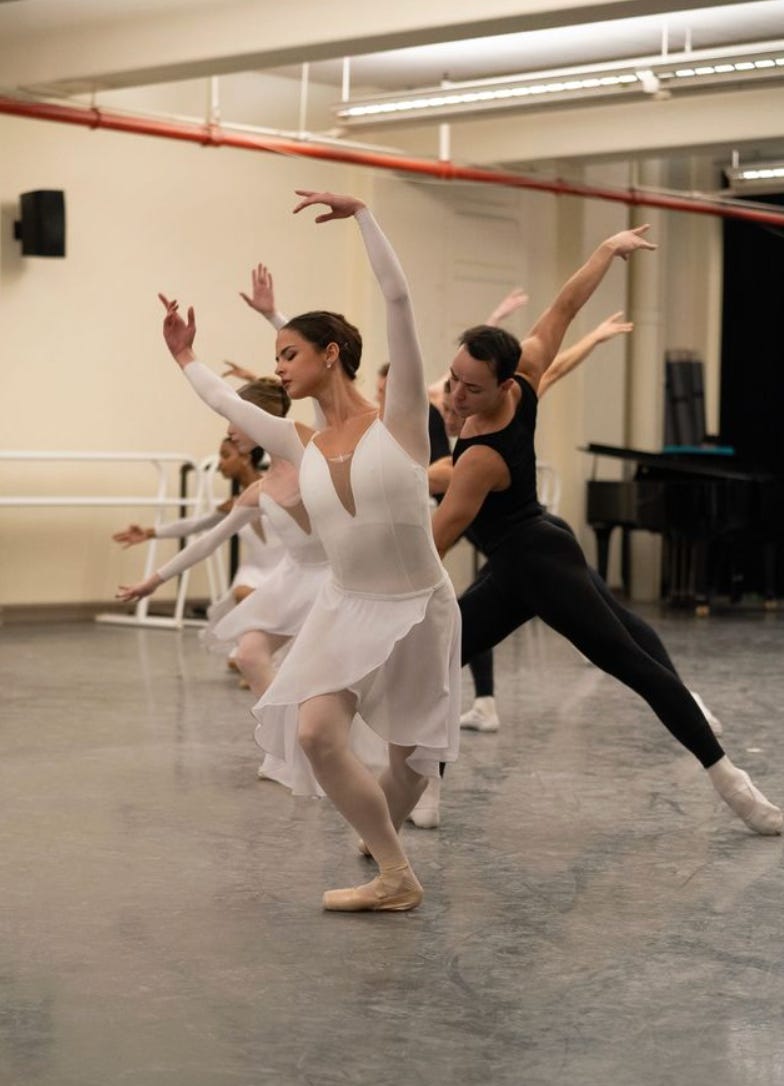
Trinity Santoro, Kayke Carvalho in Melvin Lawovi’s Piano Pieces. Photo: Natalia Sanchez.
Followed by the young Aleisha Walker’s Twilight Tango. She sweetly noted that the two dancers were her best friends and that the piece was inspired by Dancing With the Stars. It was organized and playful but would have benefited from some compositional study as it existed in only one octave: two dancers mirroring each other for the entire duration. Although women make up 70–90% of ballet’s population (depending on the statistic), there are almost zero notable female choreographers in ballet. This stands in contrast to modern dance, where many of the major figures are women (think Martha Graham, Isadora Duncan, Ruth St. Denis, to name only a few). Imagine the potential creativity lost when 90% of the group isn’t participating in the art form’s development in a meaningful way. Seeing Walker as the youngest artist—and the only woman—in this year’s cohort makes one hope she’ll give herself permission to take her work more seriously.
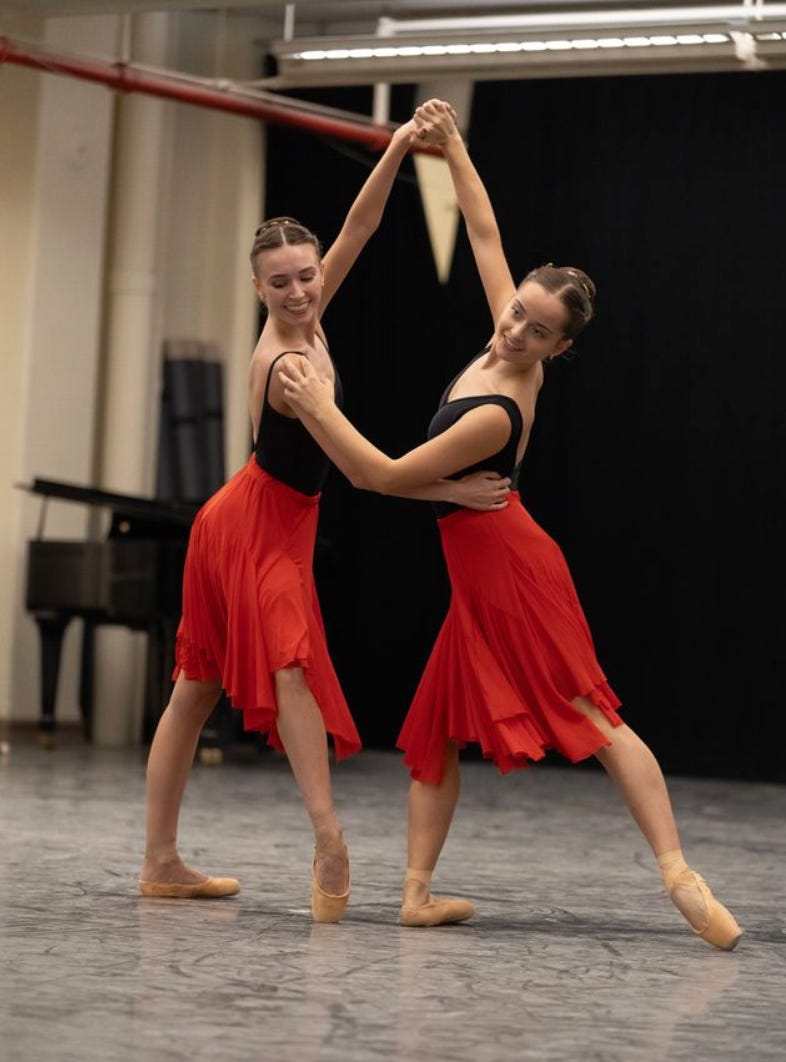
Tillie Glatz and Sylvie Squires in Aleisha Walker’s ‘Twighlight Tango’. Photo: Natalia Sanchez.
Duncan Lyle’s Pas D’Aurore, was set to a lost Minkus score—the same composer responsible for classics like La Bayadere, Don Quixote and Paquita. Music from the days when composers wrote made to order music for the choreographers or even specific ballerinas, pre-dating Tchaikovsky’s symphonic revelations that altered the future of the form. Both the music and the dance (intentionally) seemed like they were lifted straight from a lost ballet, an archival work revived, like a Petipa cover band. Interesting to note Lyle also made all of the costumes himself.
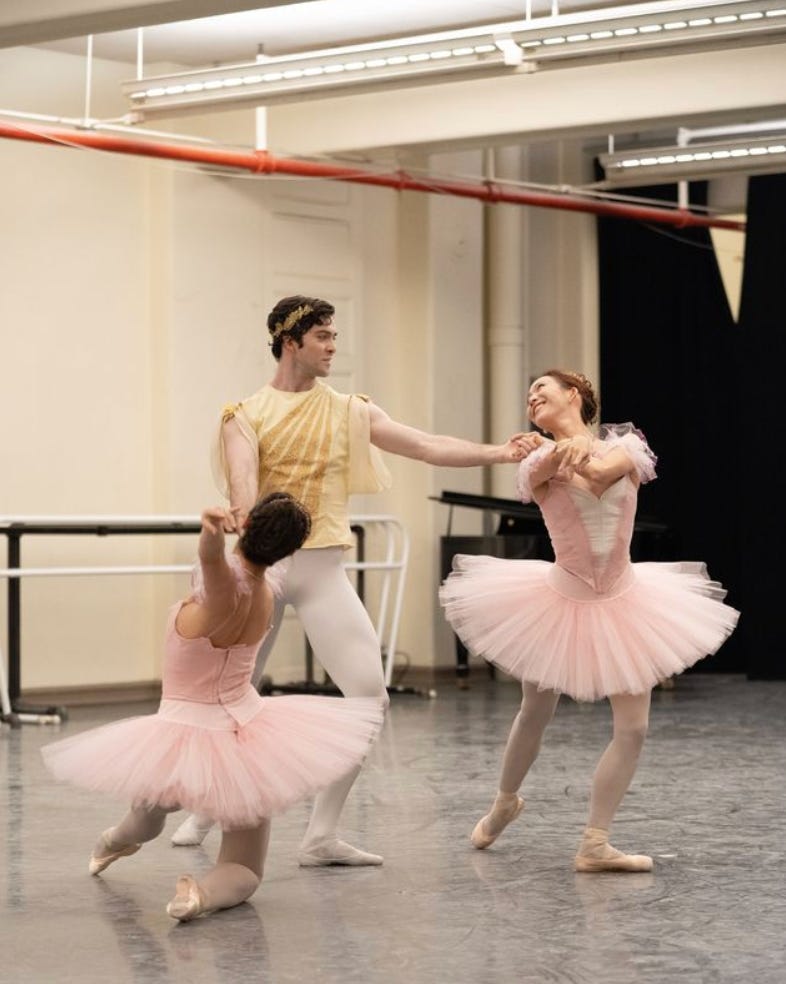
Lauren Bonfiglio, Tristan Brosnan, Atau Watanabe in Duncan Lyle’s ‘Pas D’Aurore’. Photo: Natalia Sanchez.
ABT principal dancer James Whiteside—who has long been a popular personality beyond the stage, though having thousands of internet fans doesn’t necessarily mean the dancer is a substantive artist—is, happily, a multitalented artist, and he delivered choreography that was as interesting as it was enigmatically beautiful. Mantle, a piece for four dancers, began as a pas de deux he created for himself and Gillian Murphy in 2014 to Schubert songs sung by Renée Fleming and played by Christoph Eschenbach. The expanded version, for three women and one man, was danced by a talented cast: Sierra Armstrong (a potential inheritor of Murphy’s place in the company); Ingrid Thoms, a charismatic dancer whom we hope to see more of; the lithe and intriguing Sunmi Park; and the lone man, the lyrical Finnian Carmeci. The women functioned as a kind of trio of mythical graces to Carmeci’s mortal man (an impression, not an official interpretation). Duets flowed into solos and trios. Carmeci was wrapped and unwrapped in a cape, as if the muses cared for him but did not need him. The ballet, like many musical scores, is plotless, yet left the audience with the catharsis that comes after a long internal journey. If there’s more where this came from, then Whiteside would appear to be taking the torch from the likes of the poetic and as of yet un-replaced Robbins.
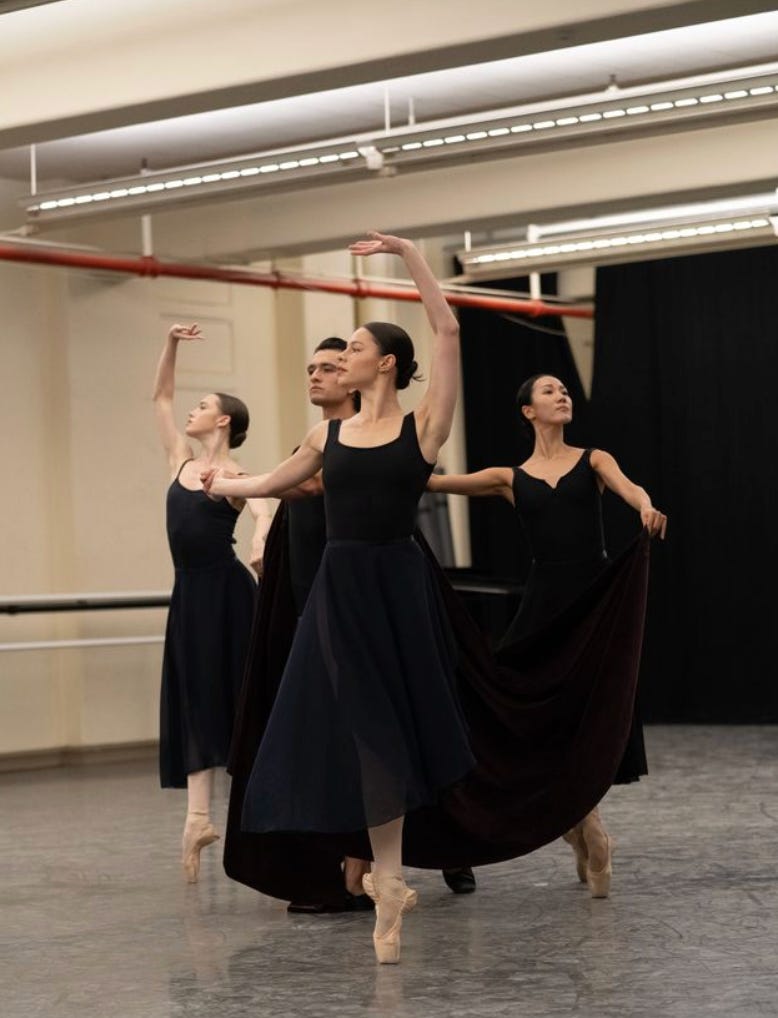
Sierra Armstrong (center), Ingrid Thoms (left), Sunmi Park (right), Finnian Carmeci in James Whiteside’s ‘Mantle’. Photo by Natalia Sanchez.
At the end of the Choreography Incubator presentation, a Q&A session was held with the participating choreographers and Sebastian, the program’s director. The audience—so captivated by what they had just witnessed—naturally asked whether any of the works might be staged during an upcoming ABT season. The panelists demurred; it was not a question they were in a position to answer. Still, the idea seems both obvious and compelling: why not fully cultivate the choreographic potential already within the company?
This becomes especially striking when one considers some of the recent new or new-ish productions staged by ABT—the incoherent Nunes premiere Have We Met?, or McGregor’s strobe-lit and unmistakably Forsythe-derivative Woolf Works—as well as the enormous costs associated with commissioning and mounting new work. If this incubator is any indication of what is already percolating inside the company, it seems artistically vital to invest in the voices emerging from ABT’s own ranks. Companies take note, ABT may have uncovered dance’s next major contributor all because they set aside a few basic resources for internal research and development.
The non-linear path of dance creation carries an immense opportunity cost: for the artists, for audiences, for the art form itself. How much talent has been lost? How many groundbreaking works—or commercial successes—have simply vanished into the void because we have not made it a practice to seek out new voices from within, rather than chasing them from without?
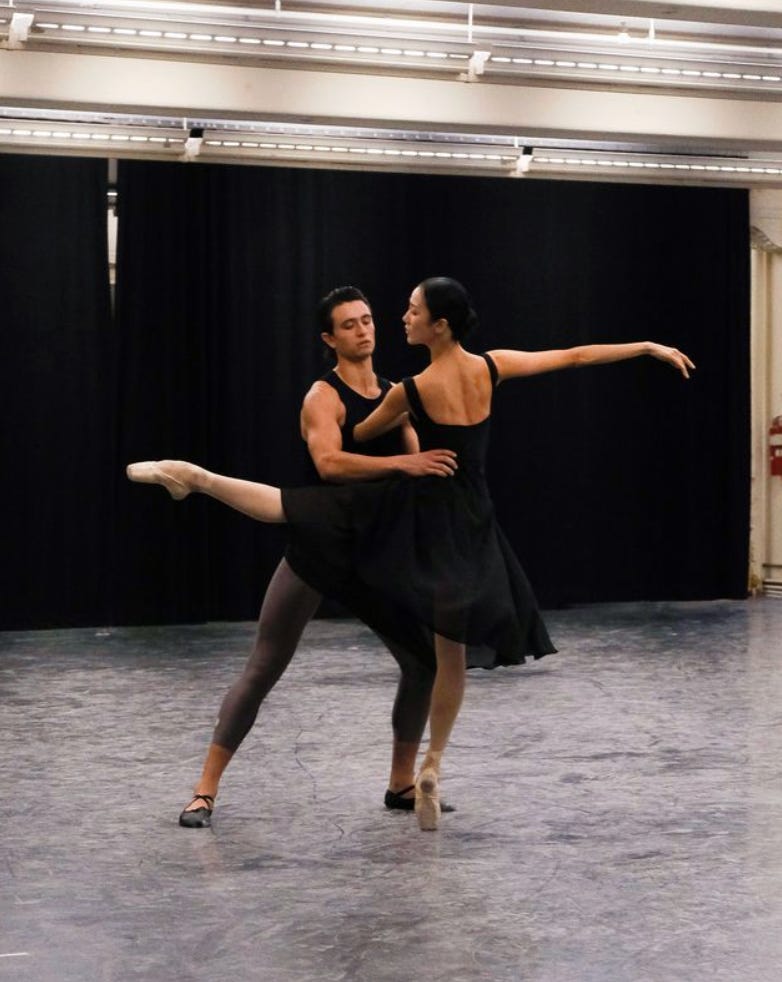
Sunmi Park, Finnian Carmeci in James Whiteside’s ‘Mantle’. Photo by Natalia Sanchez.
I have often felt like I was yelling into a void when I say that I find Justin Peck's re-heated Jerome Robbins leftovers extremely repetitive and not worth the columns of ink expounded on his so called inventiveness. Ballet Hispanico does hold up Latina visionaries in its rep with Anna Lopez Ochoa and Michelle Manzanales's work being showcased most seasons. I don't understand why ABT refuses to allow at least one of its incubator works into rep every season, at least at one performance.
I really appreciate this closer look at this incubator series as I see both ballet and modern companies embrace similar systems. On another note, I do believe there is a missing structure for those who thrive in choreography, though maybe less so in performance to make their way to working with such high caliber talent. College programs foster brilliant choreographers who may spend their undergrad or grad years fine tuning choreographic skills but then getting in the choreographic door isn’t accessible. I think similar to teaching, being a highly skilled dance artists doesn’t naturally make someone a strong choreographer and I’d love to see companies embrace the sectors of skills both as they intersect and where some thrive independently in their strengths.